
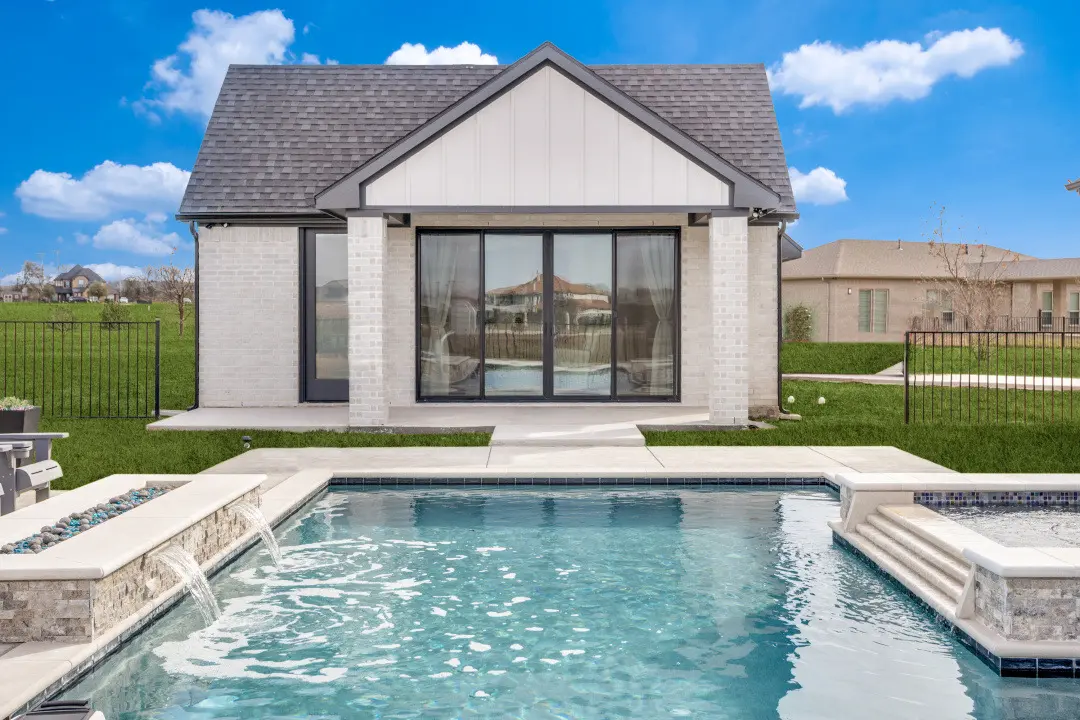
When a parent needs to move close, a granny pod can look like the fast, simple answer. Sometimes it is. Here's an honest look at both.
What a Granny Pod Is
"Granny pod" usually means a small, factory-built unit, often 200 to 400 sq ft, delivered to the backyard. Some sit on a foundation. Others sit on blocks or wheels. Most include a bedroom area, a bathroom and a small kitchen.
What an ADU Is
An ADU (accessory dwelling unit) is a small home built on your lot, on a permanent foundation, designed around your yard and your house. In Dallas, families call them guest houses, in-law suites or backyard homes.
Side by Side
- Size: Granny pod: Usually 200 to 400 sq ft. Built ADU: Sized to your lot (in Dallas, often up to 25% of your house)
- Foundation: Granny pod: Blocks, wheels or a slab. Built ADU: Permanent foundation
- Permits in Dallas: Granny pod: Still needed. A unit with a kitchen is a dwelling unit. Built ADU: Needed, usually with a Board of Adjustment special exception
- Utilities: Granny pod: Still need water, sewer and power run to it. Built ADU: Same
- Looks: Granny pod: Off-the-shelf design. Built ADU: Matched to your house
- Accessibility: Granny pod: Varies by model. Built ADU: Designed for your parent: zero-step entry, wide doors, curbless shower
- Lifespan: Granny pod: Shorter. Built ADU: Built like a house
- Later uses: Granny pod: Limited. Built ADU: Guest house, office, grown kid
The Part Most Pod Sellers Skip
The pod is only part of the cost. It still needs a site, utility trenching, a permit and an inspection. In the City of Dallas, a backyard unit with a kitchen usually needs a Board of Adjustment special exception, whether it was built in a factory or on site. In Highland Park, detached buildings can't have kitchens at all. Read our Dallas ADU permit guide before you order anything.
When a Granny Pod Makes Sense
- You need a short-term solution and plan to remove it later
- Your lot can't fit a built unit, and the pod is smaller
- You've confirmed the permit path for your address first
When a Built ADU Makes More Sense
- A parent will live there for years
- You want it to match your house and your street
- You want a layout designed around your parent's mobility
- You're in a conservation district, where the design gets reviewed
See in-law suites · See backyard ADUs
Frequently Asked Questions
Are granny pods legal in Dallas?
They can be, with the right permits. A pod with a kitchen is treated as a dwelling unit, so it usually needs a Board of Adjustment special exception in the City of Dallas.
Is a granny pod cheaper than an ADU?
The unit itself often is. Once you add site work, utilities and permits, the gap gets smaller. Get both priced for your lot before you decide.
What's the difference between a granny pod and a granny flat?
"Granny flat" is another name for an ADU. "Granny pod" usually means a prefab unit.
Can a granny pod be made wheelchair accessible?
Some can. Check door widths, the shower and the entry step before you buy. A built in-law suite can be designed for it from the start.