6 Min Read
In homes across Dallas, families are quietly facing one of the most emotional decisions they’ll ever make:
How do we help our adult child with special needs build independence without sacrificing safety?
Is assisted living the only option? For many Dallas families, the answer is closer to home, sometimes just steps outside the back door.
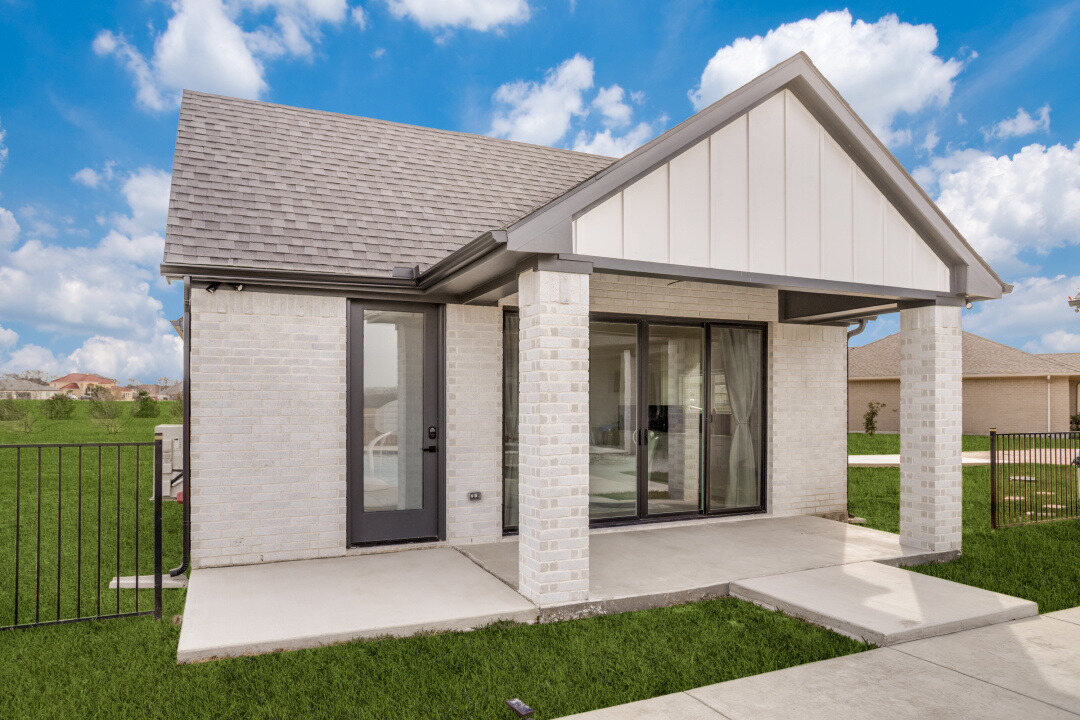
Accessory dwelling units (ADUs), sometimes called backyard cottages or guest houses, are becoming a thoughtful solution for families who want to provide independence, dignity, and safety for a loved one with special needs while keeping them close. Instead of choosing between full-time institutional care and squeezing someone into a spare bedroom, families are creating a private, fully functional home right on their own property.
And here in Dallas, where property values are strong and multigenerational living is becoming more common, ADUs are opening doors for families who want to do right by the people they love most. At Estate ADU, this is the heart of why we started this company. We specialize exclusively in building accessory dwelling units in Dallas–Fort Worth. We’re not general remodelers who occasionally build a guest house. ADUs are what we do, every day.
On this page:
- The Housing Challenge for Adults with Special Needs in Dallas
- What Is an ADU — and Why Is It Different?
- Designing an ADU for Safety, Accessibility, and Dignity
- Are ADUs Legal in Dallas?
- Is Building an ADU Right for Your Family?
- Frequently Asked Questions About Building an ADU for a Special Needs Family Member
The Housing Challenge for Adults with Special Needs in Dallas
When families begin exploring housing options for a disabled adult child, the choices can feel limited and overwhelming. Each option comes with trade-offs. And none of them are simple. In Dallas and across Texas, the most common options typically include:
- Assisted living communities
- Group homes
- Independent apartments with outside support
- Moving in full-time with family
Limited Options Beyond the Family Home
Assisted living in Dallas can provide structure and care, but it also comes with a high monthly cost and a significant emotional shift. Group homes may offer community, but availability can be limited and waiting lists are common. Independent apartments can work for some adults with disabilities but may require daily transportation or coordination of outside caregivers.
For many parents of adult children with special needs, the deeper concern is rooted in the long-term future.
- Who will look out for them?
- How independent can they safely be?
- What happens if something changes unexpectedly?
The Emotional Trade-Off Families Face
Most families aren’t simply comparing square footage or price tags. They’re weighing emotional trade-offs:
- Safety vs. independence
- Supervision vs. privacy
- Professional care vs. family connection
- Cost vs. long-term stability
Bringing an adult child or aging parent into the main house can work for a season. But over time, shared kitchens, shared bathrooms, and shared routines can strain even the healthiest relationships. Everyone deserves space, especially when long-term care is involved.
At the same time, moving a loved one across town, or into a facility, can feel like losing daily connection and present logistical challenges.
For a growing number of homeowners, building an ADU for a special needs family member offers a balanced answer, allowing a loved one to live in their own home, with their own kitchen and entrance, while still being just steps away from the people who care about them most.
What Is an ADU — and Why Is It Different?
An accessory dwelling unit (ADU) is a fully independent, secondary home built on the same property as a primary residence. In Dallas, that often means a detached backyard cottage, a converted garage, or a thoughtfully designed small home behind the main house.
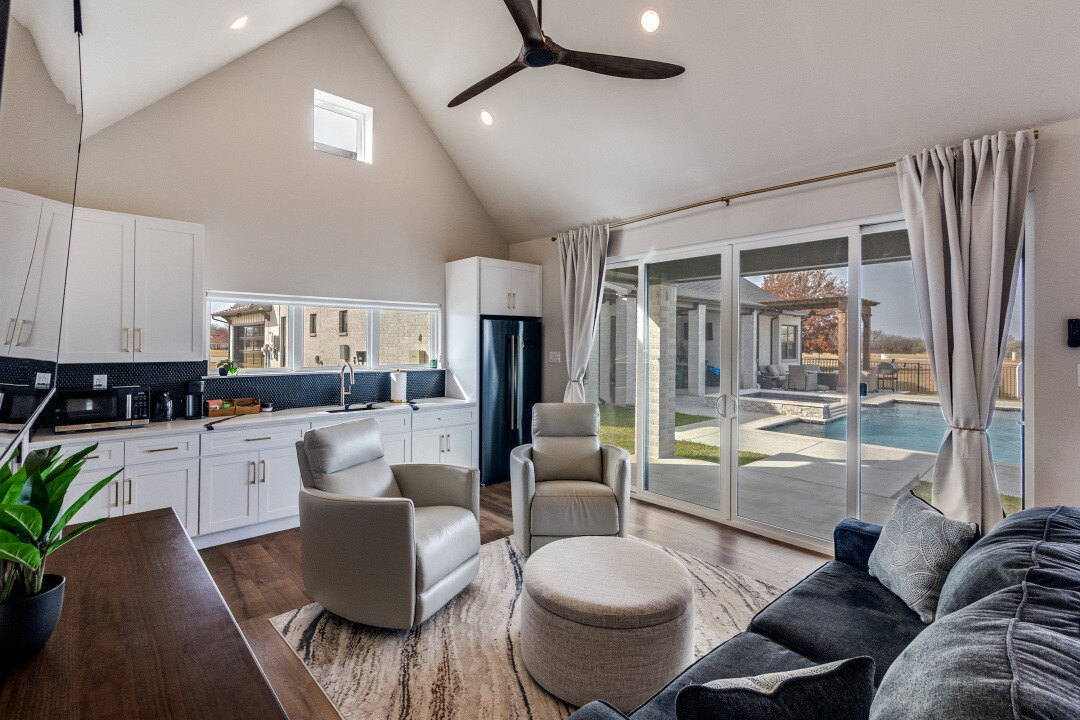
An ADU includes everything needed for independent living:
- A private entrance
- A full bathroom
- A kitchen or kitchenette
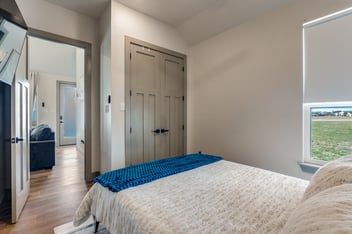
- A bedroom and living space
- Separate utilities if needed
Close Enough to Support — Far Enough to Grow
With a detached ADU, your adult child can:
- Maintain their own routine
- Host friends or support staff
- Practice financial responsibility
- Develop daily living skills
While you can:
- Check in easily
- Provide transportation support
- Step in quickly during emergencies
- Offer guidance without hovering
It’s not 20 minutes away. It’s 20 steps.
For adults with special needs, especially those who benefit from structure and familiar environments, staying on family property reduces disruption. There’s no new neighborhood to navigate. No unfamiliar caregivers cycling in and out. No abrupt separation from long-established routines.
Designing an ADU for Safety, Accessibility, and Dignity
In Dallas, many families choose to design their ADU with both present and future needs in mind.
Physical Accessibility Features
Depending on mobility levels, that may include stylish:
- Zero-step entries
- Wider doorways and hallways
- Open floor plans with turning radius
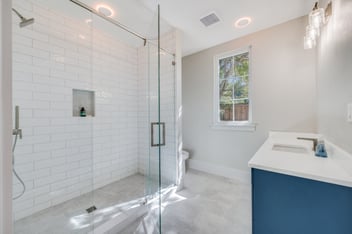
- Roll-in showers
- Grab bars and reinforced walls
- Lever-style handles instead of knobs
- Slip-resistant flooring
Sensory and Cognitive Design Considerations
For adults with autism or sensory sensitivities, design choices can dramatically impact quality of life.
- Soft, adjustable lighting
- Sound-dampening insulation
- Simplified floor plans with minimal visual clutter
- Clear separation between private and social spaces
For those with cognitive challenges or memory-related conditions, additional supports may include:
- Straight, intuitive pathways
- Clearly defined room transitions
- Secure but non-institutional entry systems
- Outdoor access that allows freedom without risk
Designed for the Long Term
One of the advantages of building a custom ADU in Dallas is futureproofing. Needs can evolve over time. Mobility can change. Support levels can shift. A well-designed ADU anticipates that.
Are ADUs Legal in Dallas?
In many areas of Dallas, accessory dwelling units are legal, but permission is not automatic.
Yes — But It Depends on Your Property
In the City of Dallas, ADUs are permitted in many residential zoning districts. However, factors like the following can influence whether an ADU can be approved and how large it can be.
- Lot size
- Alley access
- Existing structures
- Historic district guidelines
- HOA restrictions
Navigating Permitting Without the Headache
Submitting plans, responding to city comments, coordinating inspections, and addressing HOA concerns requires experience. Working with a builder who specializes in ADUs can make that process significantly smoother.
When ADUs are designed with Dallas regulations in mind from the beginning, you avoid costly redesigns and unnecessary delays. And for families who may be trying to move quickly to create a safe, stable housing solution, that efficiency matters.
Is Building an ADU Right for Your Family?
An ADU isn’t the right solution for everyone. But for many families supporting an adult with special needs, it offers something rare: stability that grows with them.
Before moving forward, it helps to ask a few honest questions.
Questions to Consider
- Does our property have enough space to support a detached or converted ADU?
- Do we want to stay actively involved in daily support?
- Would our adult child benefit from structured independence?
- Are we planning for long-term housing, not just the next few years?
- Are we prepared for the financial investment required?
For families who answer “yes” to most of these, an ADU can provide both independence and security in one solution.
When an ADU May Not Be the Best Fit
There are situations where another path may make more sense.
For example:
- If 24/7 medical supervision is required
- If the lot size cannot meet city requirements
- If HOA restrictions make approval unlikely
- If the family plans to relocate in the near future
In those cases, alternative housing arrangements may be more appropriate.
Frequently Asked Questions About Building an ADU for a Special Needs Family Member
How much does it cost to build an ADU in Dallas for a special needs adult?
In Dallas–Fort Worth, most detached ADUs typically range from the mid-$100,000s and up, depending on size, finishes, accessibility features, and site conditions. Garage conversions may cost less, while fully custom backyard cottages with enhanced accessibility features may cost more.
The most accurate way to understand cost is to evaluate your specific lot, zoning, and design goals. Accessibility upgrades are often more affordable when integrated into the original design rather than added later.
Explore our cost guide for more detailed information.
Can an ADU help with long-term care planning?
Yes, and this is one of the biggest reasons families choose this route.
For parents of special needs adults, long-term housing is often the biggest unanswered question. An ADU can provide:
- Stable housing for decades
- A transitional step toward greater independence
- A property asset that remains valuable long-term
- Flexibility if care needs change
Some families also coordinate ADU planning alongside special needs trusts or long-term financial planning strategies, creating a more comprehensive future plan.
Can a caregiver live in the ADU if needed?
Depending on family preference and layout, an ADU can be designed to accommodate live-in support staff. Some families build a one-bedroom unit with space for periodic overnight care. Others plan for flexibility with a two-bedroom ADU, allowing the unit to serve the adult child now and potentially a caregiver in the future.
Will building an ADU affect our property value?
In many Dallas neighborhoods, thoughtfully designed ADUs can increase overall property value, particularly when built to match the architectural style of the main home.
Even beyond resale value, families often view an ADU as a long-term investment. If circumstances change, the space can later serve as:
- A guest house
- A home office
- A rental unit (where permitted)
- Housing for another family member
How long does it take to build an ADU in Dallas?
Timelines vary depending on permitting, HOA review, and design complexity. In general, families should plan for several months from feasibility review through final construction.
Because Dallas permitting can influence timelines, working with an ADU-focused builder helps streamline the process and reduce avoidable delays.
Serving Dallas–Fort Worth Families with Custom ADUs
If you’re exploring housing options for a special needs family member and wondering what’s possible on your property, we’d be honored to help.
At Estate ADU, we specialize exclusively in building accessory dwelling units throughout the Dallas–Fort Worth metroplex. From feasibility reviews and design planning to permitting and construction, we guide families through each step with clarity and professionalism.
Contact Us
If you’d like to understand whether an ADU is possible on your lot and what it could look like for your family, contact us here. We’ll give you straightforward answers and help you plan.